
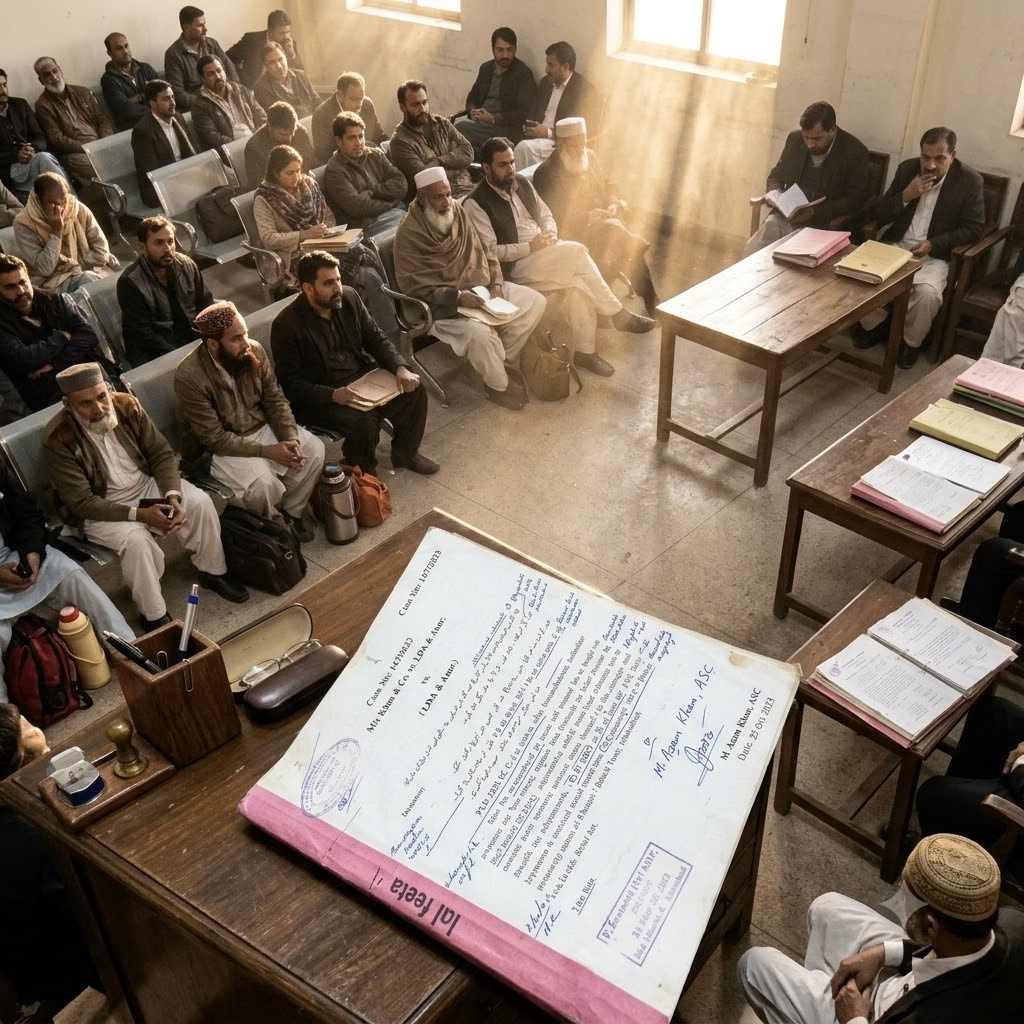
Banking dispute laws Pakistan in Islamabad have become increasingly important for account holders, investors, guarantors, borrowers, and business owners facing recovery notices, frozen accounts, loan defaults, fraudulent transactions, or banking contract disagreements. In Islamabad, banking disputes are generally handled through Banking Courts, civil litigation mechanisms, mediation channels, and statutory procedures governed under the Financial Institutions (Recovery of Finances) Ordinance 2001, Civil Procedure Code 1908, and related State Bank regulatory frameworks. Recent judicial developments have further intensified public attention toward financial litigation. Senior judicial authorities have emphasized that prolonged banking litigation weakens financial discipline, while ADR-led reforms and mediation mechanisms are being promoted to accelerate banking dispute resolution. Legal and commercial circles in Islamabad, especially around Blue Area, DHA, and G-11, now recognize that unresolved financial disputes can rapidly escalate into asset attachment proceedings, account restrictions, or complex recovery litigation if ignored at an early stage.
A client from F-6 arrived at my office regarding a severe dispute over Banking dispute laws Pakistan. He was a mid-level construction supplier operating between Islamabad and Rawalpindi who had obtained a commercial finance facility for machinery procurement. Initially, the relationship with the bank remained stable. However, after delayed government payments and rising financing charges, the account classification shifted toward default status. The client soon received legal notices threatening recovery proceedings, attachment of collateral documents, and adverse reporting. Matters worsened when the bank questioned ownership records linked with a commercial property in DHA and demanded updated Fard documentation. The client had never previously entered a Banking Court or Katchery and assumed that informal discussions with branch staff would resolve the dispute. Instead, the legal department initiated recovery action while simultaneously freezing operational flexibility for his business accounts in Islamabad.
The legal issue centered around whether the bank had properly complied with statutory recovery procedures and whether the borrower had viable legal defences regarding markup calculations, notice requirements, and valuation irregularities. Under the Financial Institutions (Recovery of Finances) Ordinance 2001, banks possess strong legal powers to recover outstanding finances, but these powers are not unlimited. Islamabad litigants often misunderstand that banking disputes are not purely criminal or purely civil matters. Depending upon allegations, disputes may involve contractual obligations, mortgage enforcement, fraud accusations under the Pakistan Penal Code, or injunction proceedings before civil courts. The client’s financing documents, Vakalatnama authorizations, mortgage papers, and account statements required detailed examination. Additional complications emerged because one guarantor claimed signatures had been obtained without proper disclosure. Such disputes commonly arise in commercial sectors of Islamabad, particularly involving businesses operating in G-11, Blue Area, and DHA commercial zones. In several matters, procedural defects in notices or improper calculation of liabilities become central issues before the court.
From a judicial perspective, Banking Courts in Islamabad increasingly encourage procedural discipline and negotiated settlements before prolonged litigation. Courts carefully evaluate whether legal notices were properly served, whether account statements comply with evidentiary standards under the Bankers’ Books Evidence Act, and whether recovery claims are proportionate. Recent judicial discussions regarding mediation reforms and ADR mechanisms reflect a growing recognition that delayed financial disputes weaken investor confidence and commercial stability. In the client’s case, the court analyzed financing agreements, mortgage instruments, repayment schedules, and collateral documentation including property-related records and Fard extracts. The defence argued that certain markup calculations violated agreed financing terms while also challenging procedural irregularities in notice issuance. The bank, meanwhile, relied upon statutory presumptions favoring certified account statements. Islamabad Banking Courts typically adopt strict procedural timelines, making document preparation critically important. Even minor defects in pleadings, authorization letters, or supporting annexures can weaken a litigant’s position significantly. Businesses facing overlapping commercial or property complications may also benefit from reviewing our property disputes guide, while family-owned business conflicts sometimes intersect with succession or domestic disputes addressed in our family court procedure article.
Ultimately, the dispute was resolved through a structured negotiated settlement supervised during ongoing proceedings in Islamabad. The client agreed to a revised repayment mechanism, while the bank accepted phased clearance rather than immediate coercive recovery measures. Updated collateral verification was completed, disputed markup calculations were partially adjusted, and the freezing pressure upon operational business activity was reduced. Most importantly, the client avoided prolonged litigation that could have damaged both financial credibility and commercial continuity. The matter reinforced a recurring reality within Banking dispute laws Pakistan in Islamabad: early legal intervention, accurate documentation, and procedural strategy often determine whether a dispute escalates into severe financial exposure or concludes through controlled resolution. Many Islamabad residents mistakenly wait until summons, attachment notices, or recovery decrees are imminent before consulting legal counsel. In practice, preventive legal review at the notice stage usually creates the strongest negotiating position.
Step-by-Step Process
- Receive and review banking notice carefully.
- Consult a banking litigation advocate in Islamabad.
- Collect financing agreements and repayment records.
- Verify account statements and markup calculations.
- Prepare reply to legal notice within prescribed timelines.
- Complete Vakalatnama documentation for representation.
- Assess collateral records including property and Fard documentation.
- File defence or application before the Banking Court if necessary.
- Attend hearings and mediation discussions.
- Negotiate settlement or contest liability through evidence.
Important Legal Documents in Banking Disputes
- Financing agreement copies
- Mortgage deeds
- Guarantee documents
- Bank account statements
- Demand notices
- Repayment schedules
- Collateral ownership records
- Fard documentation for secured property
- CNIC copies of parties and guarantors
- Vakalatnama for court representation
Islamabad courts place substantial weight upon documentary consistency. Missing annexures or unsigned financing records frequently weaken both banks and borrowers during proceedings.
Common Types of Banking Disputes in Islamabad
- Loan default recovery claims
- Unauthorized account transactions
- Mortgage enforcement disputes
- Markup calculation disagreements
- Cheque dishonor litigation
- Corporate financing conflicts
- Guarantor liability disputes
- Islamic banking contract disagreements
- ATM and digital fraud claims
- Collateral valuation disputes
Commercial expansion in Islamabad and DHA has increased the frequency of complex banking litigation involving real estate, construction financing, and business partnerships.
Cost Breakdown
Banking litigation expenses in Islamabad vary according to claim size, urgency, documentation complexity, and whether settlement discussions succeed at an early stage.
- Initial legal consultation: PKR 30,075 to PKR 45,000
- Legal notice response drafting: PKR 35,000 to PKR 58,000
- Banking Court filing and representation: PKR 62,000 to PKR 127,682
- Document verification and certified copies: PKR 8,000 to PKR 18,000
- Mediation and settlement proceedings: PKR 25,000 to PKR 65,000
- Property and collateral document review: PKR 12,000 to PKR 35,000
High-value commercial financing disputes in Islamabad may involve substantially greater litigation and expert assessment costs.
Common Mistakes
- Ignoring legal notices from banks
- Signing financing documents without review
- Failing to maintain repayment records
- Assuming verbal assurances are legally sufficient
- Delaying legal consultation after default notices
- Providing inaccurate collateral documentation
- Ignoring guarantor obligations
- Using unofficial intermediaries instead of advocates
- Submitting incomplete court replies
- Failing to challenge incorrect markup calculations promptly
In Islamabad practice, borrowers often underestimate how quickly procedural timelines move once formal recovery proceedings begin before the Banking Court.
Practical Court Analysis
Banking Courts in Islamabad generally prioritize documentary evidence over emotional arguments. Certified account statements, repayment records, financing contracts, and mortgage documentation typically carry decisive evidentiary value. Courts also evaluate whether banks acted proportionately and complied with mandatory notice procedures under applicable recovery laws.
At the same time, borrowers retain enforceable legal rights. Courts may intervene where financing terms appear unconscionable, procedural compliance is defective, or recovery measures exceed contractual authority. Islamabad judges increasingly support settlement-oriented approaches in suitable commercial disputes to preserve business continuity and reduce unnecessary litigation burdens.
FAQs
Can a bank freeze my account without court proceedings in Islamabad?
Banks may impose restrictions under contractual or regulatory authority in certain circumstances, but disputed actions can still be challenged before appropriate legal forums.
What court handles banking recovery disputes in Islamabad?
Most commercial finance recovery matters are handled by designated Banking Courts under the Financial Institutions (Recovery of Finances) Ordinance 2001.
Can guarantors also face legal liability in banking disputes?
Yes. Guarantors may become legally responsible depending upon the terms of guarantee agreements and the extent of default liability.
Is settlement possible after a banking case has already been filed?
Yes. Islamabad Banking Courts frequently encourage negotiated settlements and mediation during ongoing proceedings.
Final Advice
Banking dispute laws Pakistan in Islamabad demand proactive legal management rather than reactive panic after recovery proceedings intensify. Whether the issue concerns loan default, mortgage enforcement, disputed account transactions, or guarantor liability, the earliest stages of the dispute usually determine the strongest legal strategy.
Islamabad residents and businesses operating in G-11, DHA, F-6, and Blue Area should maintain organized financial records, review financing documents carefully, and seek immediate legal assessment when notices or repayment disputes emerge. Courts increasingly favor procedural precision, documentary consistency, and commercially practical resolutions.
Most importantly, banking disputes should never be treated casually. Financial litigation affects not only assets and property, but also business continuity, commercial reputation, and long-term financial credibility.
In the light of the law — Barrister Ayesha Khan

Leave a Reply