
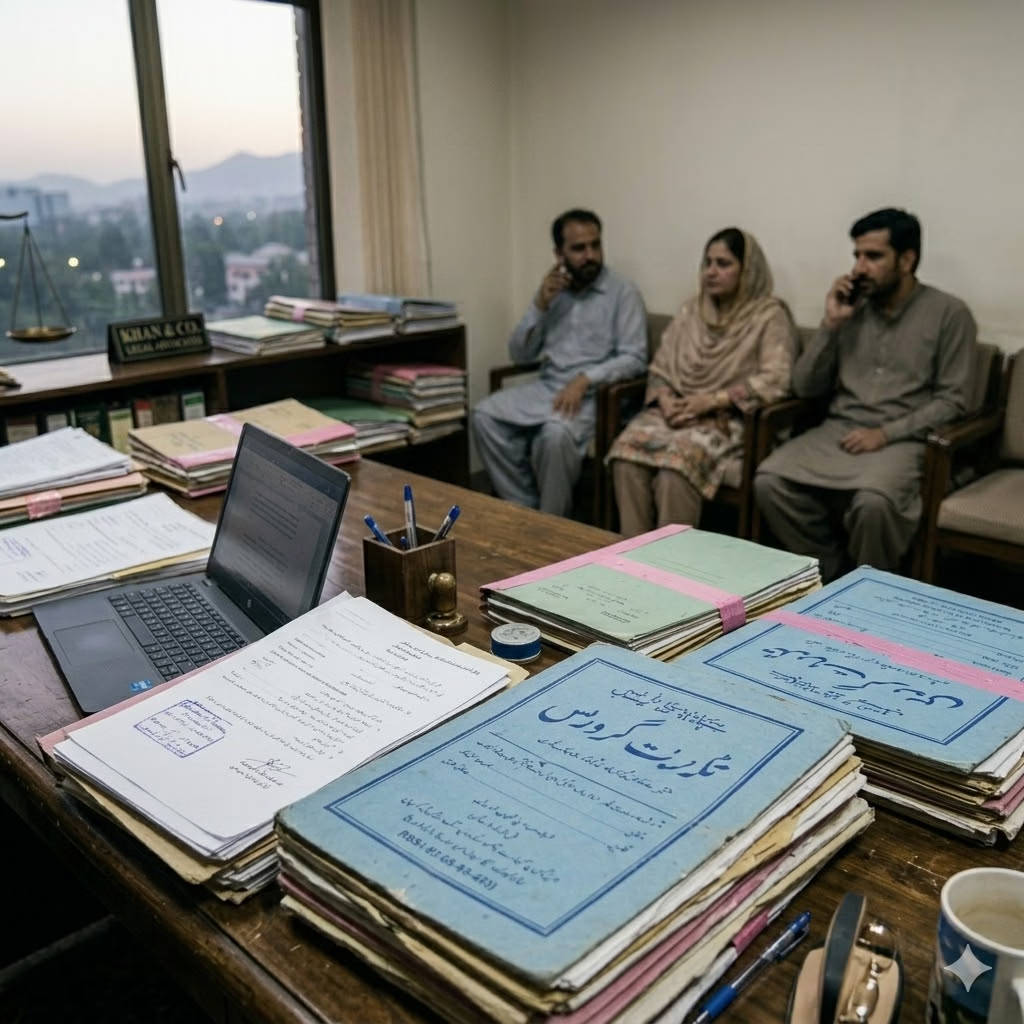
The Power of attorney process Pakistan in Islamabad allows an individual, known as the principal, to legally authorize another person, known as the attorney or agent, to act on their behalf in property, financial, legal, business, or personal matters. For residents of Islamabad, the process generally requires drafting a legally valid power of attorney, proper identification, attestation, registration where applicable, and compliance with relevant laws governing property transactions, civil proceedings, and administrative actions. A poorly drafted power of attorney can expose individuals to fraud, unauthorized transfers, prolonged litigation, and substantial financial losses.
The subject has recently attracted significant public attention. Islamabad legal circles have closely followed proceedings concerning power of attorney issues before the Islamabad High Court, including judicial directions regarding acceptance and facilitation of powers of attorney in high-profile matters. These developments highlight an important legal reality: a power of attorney is not merely a paperwork formality. It is a legally enforceable instrument capable of affecting property rights, litigation strategy, commercial authority, and financial control.
As a Barrister practicing in Pakistan and trained at Lincoln’s Inn, I often warn clients that power of attorney disputes represent one of the most preventable categories of litigation. Unfortunately, many Islamabad residents sign broad powers of attorney without fully understanding the authority being granted. Years later they discover unauthorized transfers, disputed property sales, questionable banking transactions, or litigation conducted without proper oversight.
A client from Bahria Town arrived at my office regarding a severe dispute over Power of attorney process Pakistan. He had granted a broad authority to a relative while living overseas. Initially the arrangement appeared convenient. However, several years later he discovered that decisions had been taken regarding property management, tenancy arrangements, and documentation that exceeded what he believed he had authorized. The resulting dispute involved property records, revenue documentation, Fard verification, and multiple legal proceedings. The matter illustrates why every power of attorney should be drafted with precision rather than convenience.
FAQs
What is a power of attorney in Pakistan?
A power of attorney is a legal document through which one person authorizes another individual to act on their behalf for specific or general purposes including property, litigation, banking, or administrative matters.
Must a power of attorney be registered in Islamabad?
Certain powers of attorney, especially those involving immovable property transactions, often require registration or formal attestation to ensure legal validity and enforceability.
Can a power of attorney be cancelled?
Yes. In many situations a principal may revoke a power of attorney through a legally recognized revocation process, subject to the terms of the document and applicable law.
What is the biggest risk of granting a power of attorney?
The greatest risk is granting excessive authority without safeguards, allowing the attorney to undertake actions that may create financial, property, or legal consequences for the principal.
Understanding the Legal Framework
The Power of attorney process Pakistan in Islamabad operates within a broader legal structure involving the Powers of Attorney Act, Registration Act, Civil Procedure Code 1908, Evidence laws, and various administrative regulations. Where litigation authority is involved, related documentation such as a Vakalatnama may also become relevant.
Many Islamabad residents incorrectly assume that every power of attorney creates unlimited authority. In reality, the scope depends entirely upon the wording of the document. Courts routinely examine whether authority was specific, limited, conditional, general, or improperly exercised.
The distinction between a General Power of Attorney and a Special Power of Attorney is especially important:
- General Power of Attorney grants broader authority across multiple activities.
- Special Power of Attorney authorizes specific actions only.
- Property powers require greater scrutiny.
- Litigation powers may require supporting procedural documents.
- Banking powers should define transaction limits clearly.
- Business powers should identify authorized decisions precisely.
In Islamabad, disputes frequently arise because parties use broad templates without tailoring the authority to actual needs.
Data-Driven Risk Analysis
Based on practical litigation trends observed by legal practitioners in Islamabad and major urban centers, power of attorney disputes commonly involve the following categories:
- Estimated 35% involve property sale or transfer disagreements.
- Estimated 20% involve family or inheritance conflicts.
- Estimated 15% involve overseas Pakistanis granting excessive authority.
- Estimated 12% involve banking or financial transactions.
- Estimated 10% involve tenancy and management disputes.
- Estimated 8% involve litigation authority and court representation issues.
Although these figures are practical estimates rather than official judicial statistics, they reflect recurring patterns observed across Islamabad, G-10, G-11, and surrounding regions.
| Dispute Type | Estimated Frequency |
| Property Transactions | 35% |
| Family Conflicts | 20% |
| Overseas Authority Issues | 15% |
| Banking Matters | 12% |
| Tenancy Disputes | 10% |
| Litigation Authority Issues | 8% |
The overwhelming concentration of disputes around property matters explains why power of attorney drafting deserves special attention whenever real estate is involved.
Step-by-Step Process
- Determine whether a General or Special Power of Attorney is required.
- Identify the exact powers to be granted.
- Prepare a detailed legal draft.
- Verify CNIC information of all parties.
- Collect supporting ownership or authority documents.
- Execute the document before witnesses.
- Complete attestation requirements.
- Register the instrument where required.
- Maintain certified copies.
- Provide notice of authority where necessary.
- Monitor actions taken by the attorney.
- Revoke authority formally if circumstances change.
Each step significantly reduces the likelihood of future disputes. Skipping procedural safeguards often becomes the foundation of later litigation.
Property Transactions and Power of Attorney
Property-related powers of attorney represent the highest-risk category in Islamabad. Real estate transactions involving G-10, G-11, Bahria Town, and surrounding sectors frequently depend upon delegated authority.
When property rights are involved, principals should verify:
- Exact property descriptions.
- Authority to sell or merely manage.
- Authority to receive sale proceeds.
- Revenue record consistency.
- Fard verification.
- Registration requirements.
- Revocation procedures.
Readers dealing with broader real estate issues may also find useful information in our property disputes guide.
Power of Attorney for Overseas Pakistanis
Overseas Pakistanis frequently rely upon powers of attorney because physical presence in Islamabad is impractical. While convenient, this arrangement creates additional risks.
Important safeguards include:
- Using specific authority rather than broad authority.
- Limiting financial powers.
- Defining transaction amounts.
- Specifying expiration dates.
- Requiring periodic reporting.
- Maintaining certified copies abroad.
Where execution occurs outside Pakistan, attestation and consular formalities may become relevant before the document can be effectively used within Islamabad.
Litigation Authority and Court Proceedings
Power of attorney disputes often overlap with court proceedings. An attorney may be authorized to pursue litigation, sign pleadings, or manage legal affairs. However, litigation authority should never be confused with a lawyer’s Vakalatnama.
Courts examine:
- Whether authority was properly granted.
- Whether the attorney exceeded authorized powers.
- Whether procedural requirements were satisfied.
- Whether revocation occurred before disputed actions.
- Whether documentation is authentic.
Disputes frequently emerge when multiple family members claim competing authority regarding the same property or transaction.
Family and Inheritance Risks
Family conflicts represent another major source of litigation. Powers of attorney are often granted between relatives based on trust. Unfortunately, trust alone does not eliminate legal risk.
Inheritance disputes may arise where:
- Authority continues after circumstances change.
- Property ownership becomes contested.
- Estate administration overlaps with delegated authority.
- Multiple heirs disagree regarding transactions.
Family-related legal issues may occasionally intersect with broader domestic proceedings discussed in our family court procedure resource.
Cost Breakdown
Costs associated with the Power of attorney process Pakistan in Islamabad vary according to complexity, registration requirements, drafting quality, and legal assistance required.
- Initial legal consultation: PKR 46,118 to PKR 58,000
- Drafting of Special Power of Attorney: PKR 48,000 to PKR 65,000
- Drafting of General Power of Attorney: PKR 55,000 to PKR 82,335
- Attestation and documentation expenses: PKR 8,000 to PKR 20,000
- Registration-related expenses: PKR 10,000 to PKR 35,000
- Certified copies and miscellaneous charges: PKR 3,000 to PKR 10,000
Complex property portfolios, overseas execution requirements, or dispute-related drafting may increase costs beyond these ranges.
Warning Signs of Potential Abuse
- Requests for unlimited authority.
- Pressure to sign quickly.
- Incomplete property descriptions.
- Missing revocation provisions.
- Unclear financial powers.
- Absence of independent legal review.
- Failure to provide certified copies.
- Reluctance to disclose transactions.
Most serious disputes begin with one or more of these warning indicators being ignored.
Common Mistakes
- Granting broader authority than necessary.
- Using generic internet templates.
- Ignoring registration requirements.
- Failing to define transaction limits.
- Not reviewing property records and Fard documentation.
- Not retaining certified copies.
- Trusting verbal assurances instead of written restrictions.
- Failing to revoke obsolete powers.
- Ignoring witness requirements.
- Allowing authority to continue indefinitely.
In my experience, most power of attorney litigation stems not from malicious intent at the outset, but from poorly drafted documents that create ambiguity years later.
Practical Recommendations for Islamabad Residents
Residents of Islamabad, G-10, G-11, Bahria Town, and surrounding sectors should approach powers of attorney as risk-management instruments rather than convenience documents. Every clause should have a specific purpose.
Particular caution is necessary where authority relates to:
- Property sales.
- Bank accounts.
- Corporate interests.
- Inheritance matters.
- Litigation strategy.
- High-value financial transactions.
The strongest powers of attorney are usually the most specific, limited, and carefully documented.
Final Advice
The Power of attorney process Pakistan in Islamabad can provide efficient legal authority when properly structured. However, it also carries substantial risk when drafted carelessly or granted without meaningful safeguards. Recent judicial attention to power of attorney issues demonstrates how significant these documents remain within Pakistan’s legal system.
Individuals should avoid treating a power of attorney as a routine administrative form. Whether the matter involves property, litigation, banking, or family affairs, the document should clearly define authority, impose reasonable limits, and preserve accountability.
The safest approach is simple: grant only the authority that is genuinely necessary, document everything carefully, and review the arrangement periodically. Prevention remains far less expensive than litigation after authority has been misused.
For legal certainty and risk prevention — Barrister Ayesha Khan

Leave a Reply