
FAQs
What are the basic Labour law rights in Pakistan in Islamabad?
Employees generally have rights relating to wages, safe working conditions, lawful termination procedures, compensation claims, leave entitlements, workplace dignity, and protection against unlawful discrimination under applicable labour laws.
Can an employer terminate an employee without notice in Islamabad?
Termination depends on employment terms, misconduct allegations, and applicable labour legislation. Many dismissals require procedural compliance, notice requirements, and justification to withstand legal scrutiny.
Can workers claim unpaid salaries and benefits through legal proceedings?
Yes. Employees may pursue claims relating to unpaid wages, gratuity, benefits, compensation, wrongful termination, and other employment-related disputes through the appropriate legal forums.
Do labour laws protect women and minority workers in Islamabad?
Yes. Various legal protections address workplace equality, compensation rights, maternity-related issues, and protection from unlawful discriminatory practices.
The Labour law rights in Pakistan in Islamabad remain among the most important yet misunderstood legal protections available to employees and workers. Recent judicial developments have increased public awareness regarding employment rights, workplace compensation, women’s financial protections, equitable treatment during marriage-related financial disputes, back-pay entitlements, and protections for vulnerable workers. Courts across Pakistan, including Islamabad, have increasingly emphasized fairness, procedural compliance, and lawful treatment of employees. For workers employed in corporate offices, factories, educational institutions, healthcare facilities, commercial centers, and service industries, understanding labour rights is often the difference between recovering lawful compensation and losing valuable legal claims.
As a Senior Advocate of the Supreme Court, I have maintained professional notes throughout decades of labour litigation. One recurring pattern appears in nearly every employment dispute: workers usually approach legal counsel only after substantial damage has already occurred. They tolerate delayed salaries, unlawful deductions, workplace harassment, denied leave, or wrongful dismissals until the dispute becomes impossible to ignore. By that stage, evidence is often incomplete, documents are missing, and valuable procedural opportunities have been lost.
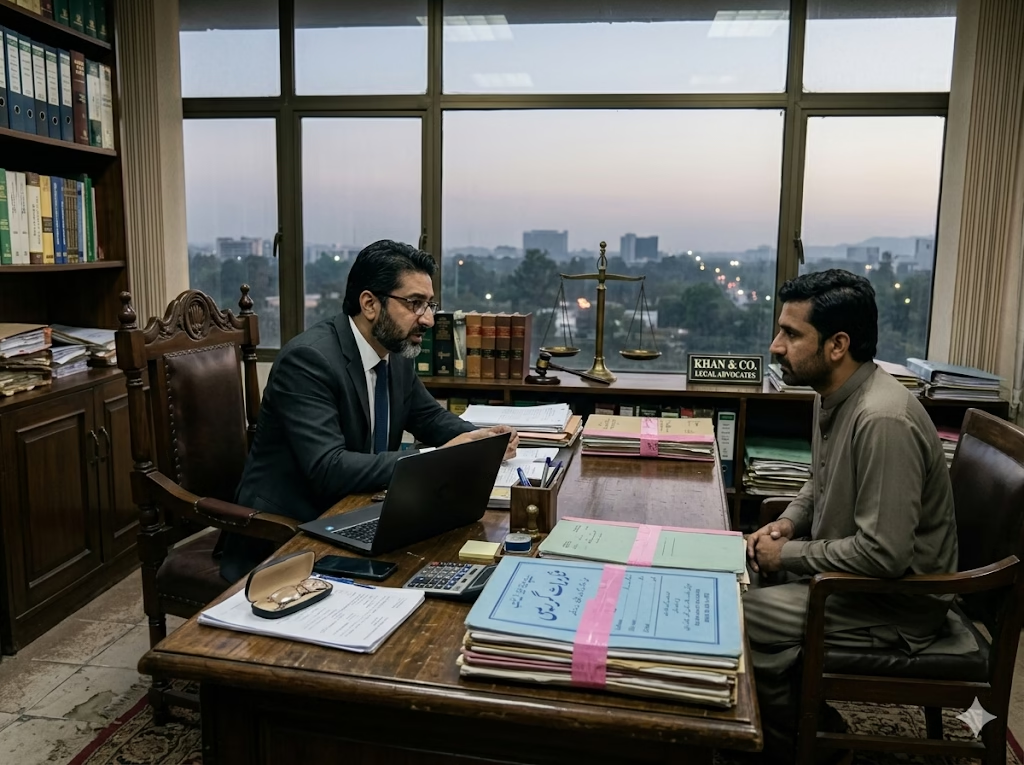
A client from F-6 arrived at my office regarding a severe dispute over Labour law rights in Pakistan. He had worked for a private company operating between Islamabad and DHA for several years. Initially, his employment record was satisfactory. However, management restructuring resulted in delayed salary payments, sudden changes in contractual duties, and eventual termination without a clear written explanation. The employee believed that because the company was influential, legal remedies were unavailable. His misunderstanding is common among workers throughout Islamabad, Bahria Town, and surrounding commercial districts.
My diary from that period records a familiar observation: employers frequently assume employees lack the resources or knowledge necessary to challenge unlawful actions. Yet courts consistently examine whether dismissals, disciplinary proceedings, and compensation decisions comply with statutory obligations. The law does not automatically favor employers or employees. Instead, it evaluates documentation, procedure, contractual obligations, and fairness.
Deep Explanation Section
Labour law rights in Pakistan in Islamabad originate from a combination of labour statutes, constitutional protections, employment contracts, judicial precedents, and regulatory frameworks. While specific obligations vary according to sector and employment category, most workers possess enforceable rights relating to wages, working conditions, termination procedures, leave benefits, workplace safety, and compensation.
Many employment disputes arise because employers and employees rely on assumptions rather than documented obligations. Islamabad courts frequently encounter cases involving verbal promises that were never incorporated into employment contracts. While verbal arrangements may carry evidentiary value in certain circumstances, written agreements remain significantly stronger.
The legal system increasingly recognizes the importance of workplace fairness. Recent judicial observations concerning women’s financial rights, employment compensation, and equitable treatment demonstrate a broader trend toward strengthening accountability in employment relationships. Labour disputes no longer concern only unpaid salaries; they often involve dignity, discrimination, contractual compliance, and procedural justice.
Employees working in Islamabad’s corporate districts, Bahria Town commercial centers, and DHA business hubs frequently encounter disputes involving performance evaluations, bonus payments, probation extensions, confidentiality obligations, and termination procedures. Each category requires distinct legal analysis.
Common Labour Rights Available to Employees
The following rights commonly arise during labour disputes in Islamabad:
- Right to agreed wages and salary payments
- Right to lawful working conditions
- Right to workplace safety protections
- Right to receive earned benefits
- Right to challenge wrongful termination
- Right to compensation where legally justified
- Right to maternity-related protections where applicable
- Right to equal treatment under applicable laws
- Right to receive contractual entitlements
- Right to seek legal remedies through competent forums
These rights are not absolute. Courts evaluate each claim according to evidence, employment terms, and applicable statutory requirements.
Diary Note: A Typical Employment Dispute
One entry from my professional diary describes an employee who maintained meticulous salary records for six years. When a dispute emerged regarding unpaid benefits, the employer produced incomplete records while the employee produced organized documentation. The outcome heavily favored the worker because documentary consistency proved more persuasive than unsupported assertions.
This lesson remains relevant today. Islamabad labour litigation often turns on paperwork rather than rhetoric. Employment contracts, salary slips, emails, attendance records, performance reviews, and official notices frequently determine the outcome.
Step-by-Step Process
- Collect employment contracts and appointment letters.
- Preserve salary records and payment evidence.
- Gather emails, notices, and workplace communications.
- Document disputed events chronologically.
- Seek legal consultation regarding available remedies.
- Issue formal notice to the employer where appropriate.
- Prepare supporting documents and witness information.
- Execute Vakalatnama if appointing legal counsel.
- File proceedings before the competent authority or court.
- Attend hearings and comply with procedural directions.
- Present documentary and witness evidence.
- Seek compensation, reinstatement, or other relief.
Employees who follow a structured process generally achieve stronger legal outcomes than those relying solely upon verbal complaints.
Termination and Wrongful Dismissal Issues
Wrongful termination remains one of the most common employment disputes in Islamabad. Employees frequently assume that every dismissal is illegal, while employers sometimes assume they possess unrestricted termination authority. Neither assumption is correct.
Courts examine factors such as:
- Employment contract provisions
- Notice requirements
- Disciplinary procedures
- Misconduct allegations
- Documentary evidence
- Employer policies
- Applicable labour legislation
Where procedures are ignored or evidence is insufficient, employers may face compensation claims or other legal consequences.
Compensation and Back-Pay Claims
Recent judicial discussions regarding back-pay rights have reinforced the importance of compensation analysis. Employees may pursue claims relating to:
- Unpaid salaries
- Delayed wages
- Overtime disputes
- Wrongful deductions
- Termination compensation
- Leave encashment claims
- Contractual benefits
- Gratuity-related disputes
Each claim requires documentary support. Unsupported estimates rarely succeed before legal forums.
Labour Disputes Involving Property and Family Matters
Some employment disputes overlap with broader legal issues. For example, housing allowances, employment-linked accommodation, or property benefits may intersect with ownership disputes. Readers facing such situations may also review our property disputes guide.
Similarly, employment conflicts occasionally influence family financial obligations, maintenance issues, or matrimonial disputes. In those circumstances, our family court procedure resource may provide useful supplementary guidance.
These overlapping legal relationships often require coordinated strategy rather than isolated litigation.
Role of Documentation
Throughout my career, documentation has consistently determined outcomes more often than legal theory alone. Employees should preserve:
- Appointment letters
- Salary slips
- Bank payment records
- Email correspondence
- Attendance records
- Performance evaluations
- Disciplinary notices
- Resignation communications
- Settlement agreements
- Identification records
Where employment benefits include housing or land-related incentives, supporting property records or Fard documentation may also become relevant.
Labour Litigation Reality in Islamabad
Many workers imagine that filing a complaint automatically guarantees compensation. In practice, labour litigation requires patience and procedural discipline. Matters may involve multiple hearings, evidentiary disputes, employer defenses, and settlement negotiations.
Islamabad courts and labour forums increasingly expect professionally organized pleadings and supporting materials. Weakly prepared claims frequently encounter delays or procedural difficulties. Employees should therefore focus on evidence preservation from the earliest stages of a dispute.
Likewise, employers benefit from maintaining transparent disciplinary procedures and comprehensive employment records. Litigation becomes substantially more difficult when documentation is inconsistent or incomplete.
Cost Breakdown
Labour dispute expenses in Islamabad vary according to complexity, duration, representation requirements, and evidentiary issues.
- Initial legal consultation: PKR 45,207 to PKR 60,000
- Legal notice preparation: PKR 18,000 to PKR 40,000
- Labour claim drafting and filing: PKR 55,000 to PKR 90,000
- Full litigation representation: PKR 75,000 to PKR 143,394
- Document review and evidence preparation: PKR 15,000 to PKR 45,000
- Certified copies and miscellaneous expenses: PKR 5,000 to PKR 20,000
Complex corporate employment disputes involving senior executives or substantial compensation claims may exceed these ranges.
Common Mistakes
- Failing to obtain written employment contracts
- Ignoring salary discrepancies for long periods
- Deleting important workplace communications
- Relying exclusively on verbal promises
- Signing settlement documents without review
- Resigning prematurely during disputes
- Missing procedural deadlines
- Submitting incomplete evidence
- Ignoring legal notices from employers
- Attending proceedings without preparation
Most unsuccessful labour claims involve preventable mistakes rather than inherently weak legal rights.
Final Advice
Labour law rights in Pakistan in Islamabad provide important protections for employees, but those protections are effective only when workers understand and exercise them properly. Whether the issue involves unpaid wages, wrongful dismissal, workplace discrimination, compensation claims, or contractual disputes, documentation remains the strongest foundation of any case.
Employees working in Islamabad, Bahria Town, DHA, and surrounding commercial sectors should maintain organized records, preserve communications, and seek legal advice before disputes escalate. Employers, meanwhile, should prioritize procedural fairness and transparent employment practices.
My professional diary contains hundreds of employment disputes, yet the lesson remains remarkably consistent: evidence, preparation, and procedural discipline matter more than emotion. Workers who understand their rights and preserve documentation place themselves in the strongest position to obtain meaningful legal remedies.
For justice and lawful employment practices — Senior Advocate Malik Raza

Leave a Reply